

CỔNG THÔNG TIN DINH DƯỠNG QUỐC GIA
VIETNAM NUTRITIONAL PORTAL
VIETNAM NUTRITIONAL PORTAL
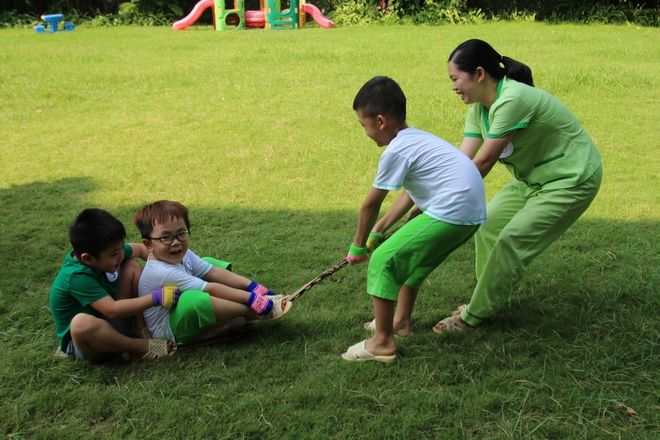
Primary school students are mainly between the ages of 7 and 11. There are many important psychological and physiological changes that take place during this stage:
Therefore, folk games for primary school students need to be selected to suit the age group where "learning while playing" is considered the main activity.
Folk games are products of our ancestors passed down through many generations, so they carry immense historical and cultural values. Through folk games, national material, collective spirit, and national solidarity are expressed in a way that cannot be mixed with other cultures.
The materials used in folk games are natural materials such as leaves, sand, stones, wood, soil, etc., completely environmentally friendly.
The items used in folk games are often very simple, readily available; and are items of little use value such as: tree branches, stones, soil,... So the cost to organize a folk game is often insignificant.
There are many folk games for primary school students in the treasure trove of Vietnamese folk games such as: Capture the flag, leader bird, ball fight, tug of war, bamboo bridge, dog release, sack jumping, ball fight, playing hopscotch, cat chasing mouse, dragon snake up to the clouds, playing volleyball, hide and seek, ring tossing, taro leaf flipping, dung dang dung de, spinning top, marbles, ring tossing,...
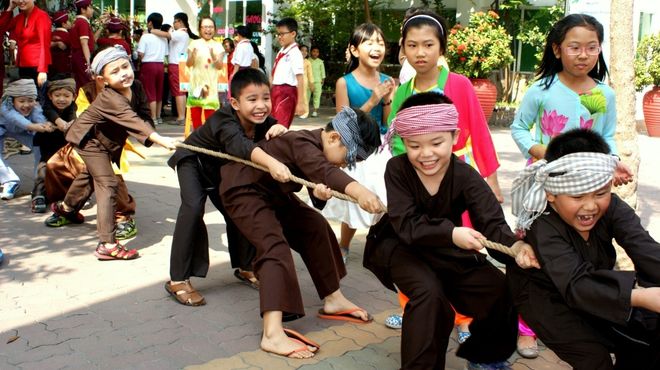
Below are some game instructions for parents to refer to.
Meaning:
This game will help foster creativity, dexterity, and enhance creativity in children.
Prepare:
Playground, a ball, chalk (marked on the playing field), two teams of equal numbers. Draw a 1m diameter circle in the middle of the field and place the ball in the middle.
How to play:
Before playing, the game leader should note: Name the two teams (team A and team B); Have the teams stand in a horizontal line at the two ends of the playing field, each team about 20m away from the other; Make a convention for the team that keeps the ball and the team that breaks the ball (the team that tries to get the ball out of the field).
Call any 2 players from the two teams to the ball-fighting area. The team that breaks the ball (B) will try to get the ball from the team that holds the ball (A). If the player from team B gets the ball, the player from team A must run after and try to touch the player who took the ball. If the player from team B can touch the ball, the player from team B will be the hostage of team A and vice versa. If the player from team A cannot touch the ball, the player from team A will be the hostage of team B. At the end of the game, the team that has captured more hostages will be the winner.
Rules of the game:
Team B fails to retrieve the ball within the allotted time and will be in violation.
If Team A prevents Team B from bringing the ball back on time, the ball will not count and must be replayed.
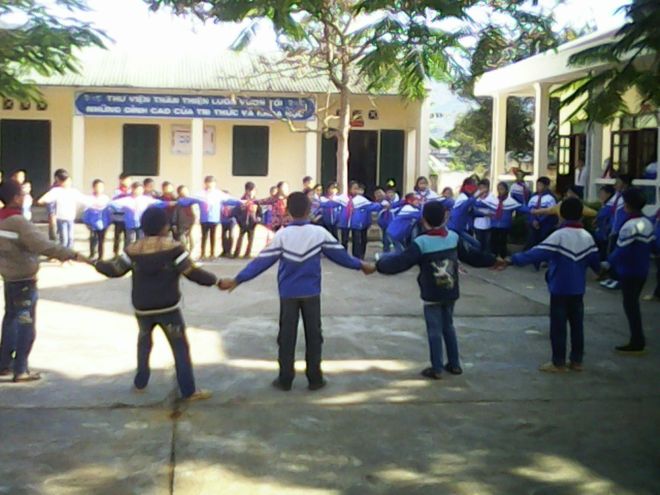
Meaning of the game:
The game aims to foster the spirit of competition for the collective, promote observation and judgment, and train flexibility for children.
Prepare:
Playground or large field, blindfold, members play.
How to play:
Before playing, the game leader should note: Arrange the children in a circle, assign one child to be the "Leader", choose another child to blindfold and let them stand in the middle of the circle.
After everything is ready, the game master signals the person in the middle to take off the blindfold and start looking for the "Leader Bird". The person playing the leader bird will do movements for the other children to follow such as sitting down, clapping, jumping, etc. If discovered, the "Leader Bird" will be blindfolded and the game continues.
Rules of the game:
You are blindfolded for a certain amount of time (pre-determined) and if you cannot find the "Leader" you will be punished.
Anyone who helps the observer find the leader bird will be punished.
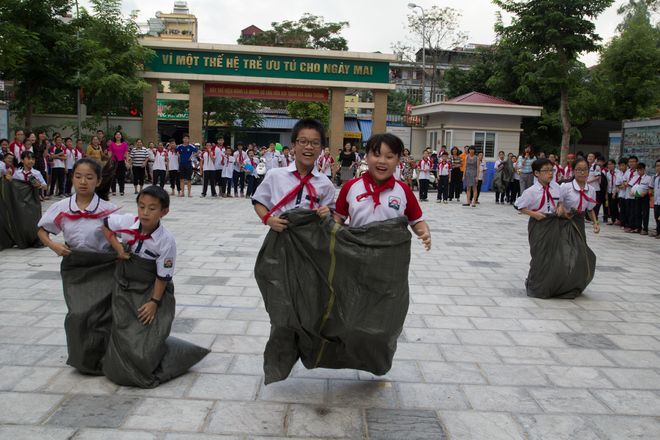
Meaning:
Children will have the opportunity to practice agility, dexterity, balance and jumping ability. Sack jumping also helps create a fun, comfortable atmosphere and helps build team spirit.
Prepare:
The number of sacks is at least half the number of players, the playing field, the players, the cheerleaders (to create the atmosphere for the game), the prizes.
How to play:
Before playing, the game leader should note: Divide the children into two or more teams with an equal number of boys and girls. Have the children line up in front of the starting line and give the two players a sack large enough for them to stand in.
When the game master gives the command, each team will jump to the given destination. After the first team jumps, the second team moves to the starting line and waits for the command, the game continues until the last pair.
Rules of the game:
The team that finishes first wins. Children can get up and continue playing after falling down. If there are not enough bags, more than two children can share one bag.
In addition to bringing many values and benefits, folk games for primary school students also help them preserve positive emotions of their school days with friends around them. Those can be beautiful memories that last a long time in life.